ATTENTION: this page is rather long and "heavy" (about 580 Kb).
If you are using a slow internet connection
it can be necessary a long time to completely load!!!!!
(but it is worth while.....)
This page is totally atypical compared to this site general contents; I have in fact decided to insert a short but very peculiar parenthesis, dedicated to my hometown and to its province, always in relationship to the Old Italian States, and containing a "mix" of history, post-cards, stamps and cancellations...
A page that does not have a precise meaning, but that simply wants to show how stamps can be the starting point to go in more depth on history and culture, beside being an amusing hobby.
- - - - - - - - -
I was born in Como and I live here, a pleasant small town of north Italy, with about 100,000 habitants and located near to the Swithzerland border, on a lake that carries the same name: Como Lake (Fig. 1-1c).
Como is well known for its natural and landscape beauties, as the lake and the mountains all around, as well as for some typical products, like the handcraft wood carving and even more for fabrics and silk in particular.
Somebody may perhaps have heard its name from Alessandro Volta the electric cell inventor.
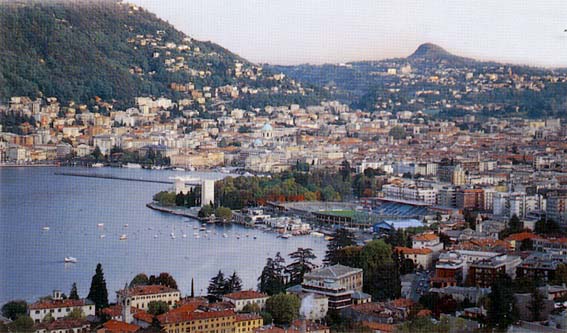
Fig. 1: the Como town (partial picture with the initial segment of the lake)
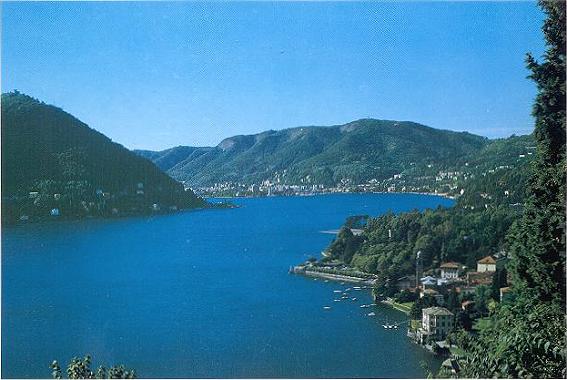
Fig. 1b: initial segment of the lake
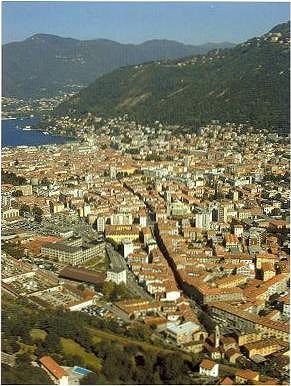
Fig. 1c: partial view of the city
It's a settlement of very old origin: in fact important archeological remaining of this past have been found.
It has been conquered by Romans from 196 bc, destroyed and rebuilt finally by Julius Cesar who called it "Novum Comum" and fortified it.
In the centuries the town was in the middle of wars and conquests also and may be mainly, due to its geographic very fortunate position, easy transit path to Swithzerland and therefore with North Europe. The Ostrogoti, Bizantini, Franchi, Milanesi, Franch and Spaniard in fact dominated it. From 1714 it was under the Austrian to go back in the hands of the French of Napoleon.
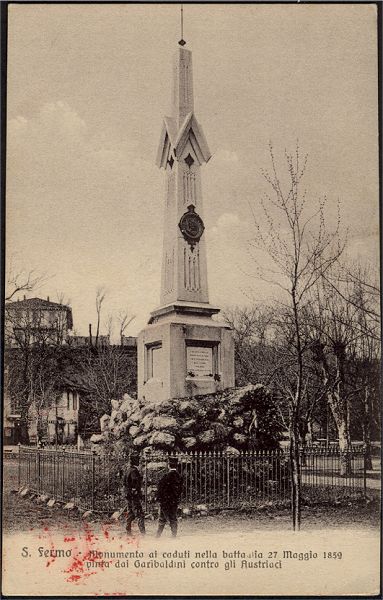
In 1815, with the Vienna Treaty, which so many times have been recalled in this site, went back under the Austrian flag, inside the Lombardy-Venetia territory. Finally the Risorgimento revolts, that brought to the Second Independence War and to Giuseppe Garibaldi victorious battle to free it definitively (San Fermo battle, May 27th 1859). It was annexed to the Sardinia Kingdom and therefore from 1861 to the Italian Kingdom.
- - - - - - - - - -
During the philatelic period of the Old States, Como was part o f the Lombardy-Venetia kingdom and it was therefore under the Austrian dominance.
The town was very important for its geographic position that, as already said, was allowing an easy contact with Swithzerland and North Europe; it was not a case that one of the first railroad pieces built in the territory was the one connecting Milano, Monza and Camerlata, a Como suburb.
The province was very large, much more than what is today: it comprehended in fact also the territories of the Lecco and Varese provinces today autonomous. The Postal Offices open (even is not with continuity) from June 1st 1850 to May 27th 1859 were in total 35. In the table below I list their names:In WHITE color the ones still part of the COMO province.
In YELLOW color the ones part of the today VARESE province.
In GREEN the ones part of the today LECCO province.
Angera Appiano Arcisate Asso Bellaggio Bellano Camerlata Cantù Canzo Carsaniga Castiglione d'Intelvi Colico Como Cuvio Dongo Erba Fino Gavirate Gravedona Introbbio Laveno Lecco Luino Maccagno Menaggio Missaglia Monticello Oggiono Porlezza Porto Valtravaglia Tonzanico Tradate Varenna Varese Viggiù
To understand the geographic position of the province, I show two small maps of the Lombardy-Venetia territory and one of the province (taken from "Annullamenti del Lombardo-Veneto" of R. Alianello, ed. Sassone 1972).
Fig. 2: the Lombardy-Venetia Kingdom and the Como province (in yellow)
Fig. 3: the old Como province, in detail
As it can be seen from the above map, only 15 of the old Como Postal Offices are still part of the today province territory. Each of them had at its disposal a cancellation tool and, in some case, even more than one. I show here the images of the cancellations used in these offices by limiting myself to the most common. It's enough to click on the thumbnail to see the zoomed image.
Fig. 1
Appiano
(37Kb) Fig. 2
Asso
(34Kb) Fig. 3
Bellagio
(47Kb) Fig. 4
Camerlata
(33Kb)
Fig. 5
Cantù
(36Kb) Fig. 6
Canzo
(55Kb) Fig. 7
Castiglione
D'Intelvi
(43Kb) Fig. 8
Colico
(50Kb)
Fig. 9
Como - 1
(47Kb) Fig. 10
Como - 2
(34Kb) Fig. 11
Como - 3
(46Kb) Fig. 12
Como - 4
(36Kb)
Fig. 13
Como - 5
(45Kb) Fig. 14
Como - 6
(33Kb) Fig. 15
Dongo
(25Kb) Fig. 16
Erba
(39Kb)
Fig. 17
Fino (Mornasco)
(37Kb) Fig. 18
Gravedona
(46Kb) Fig. 19
Menaggio
(31Kb) Fig. 20
Porlezza
(29Kb)
Fig. 4: COMO double big circle cancellation with ornament
Used June 1st 1850, the first day of issue of the stamps
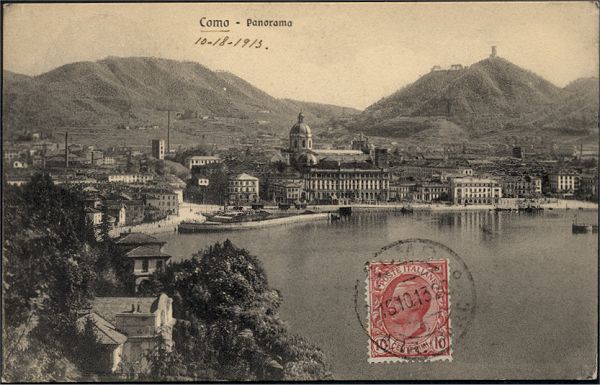
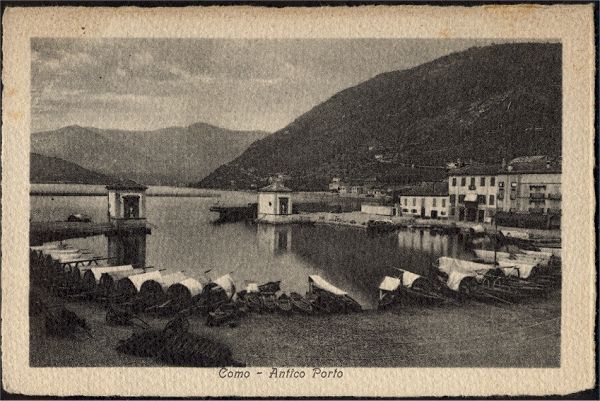
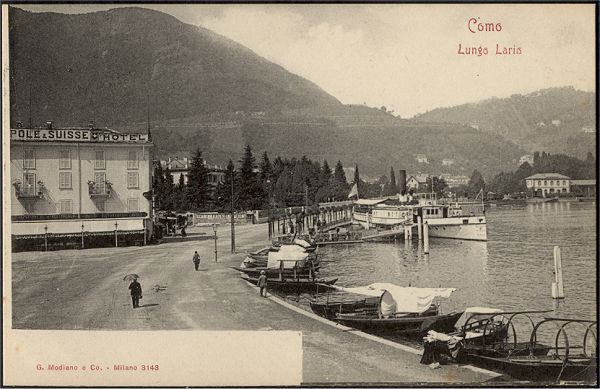
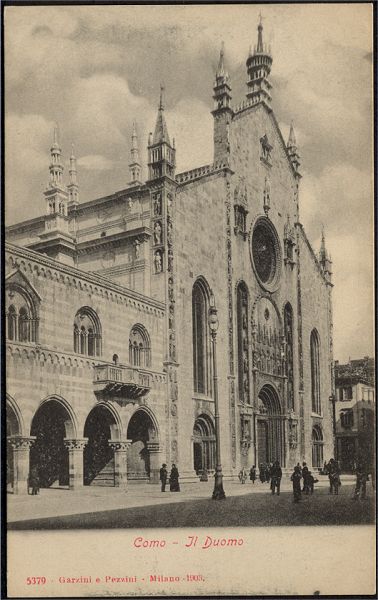
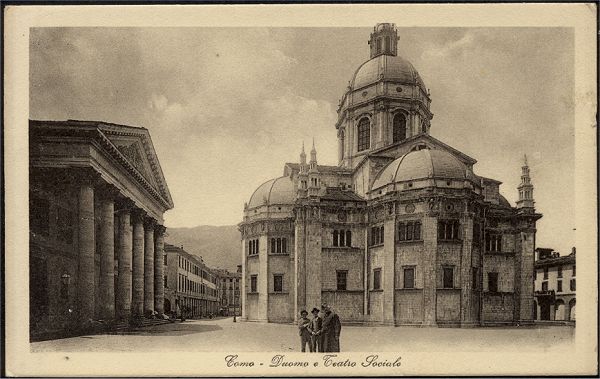
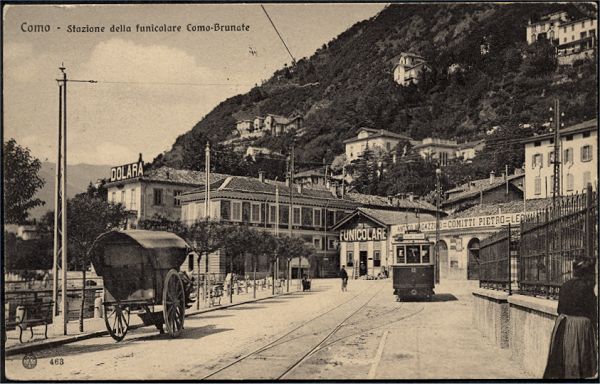
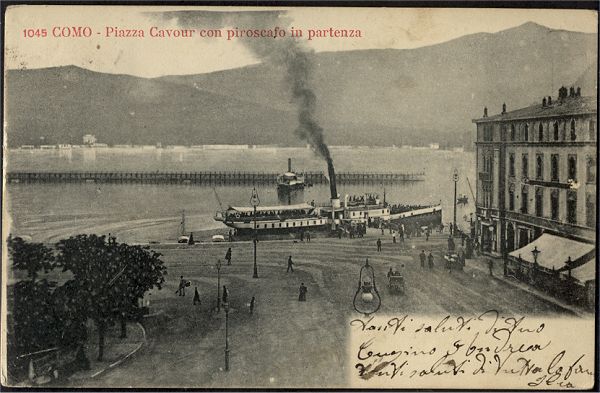
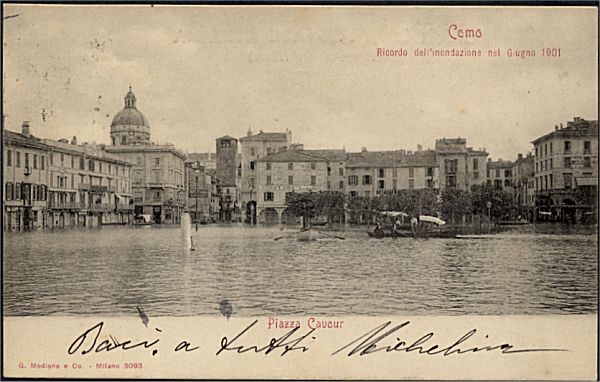
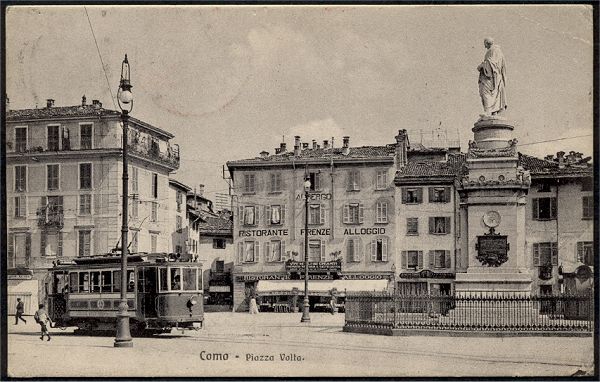
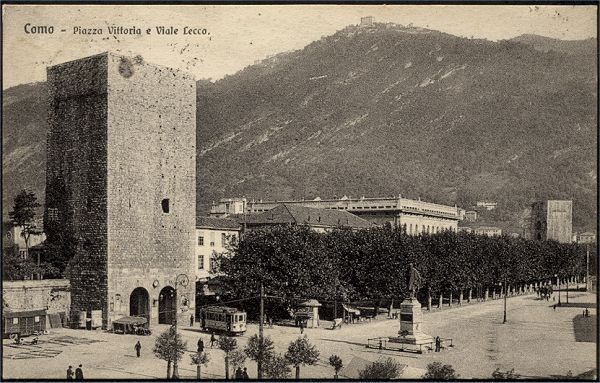
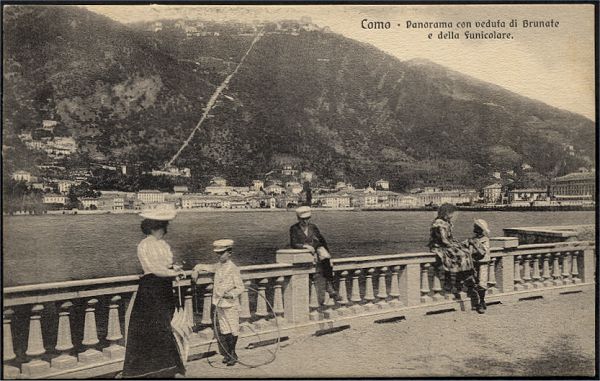
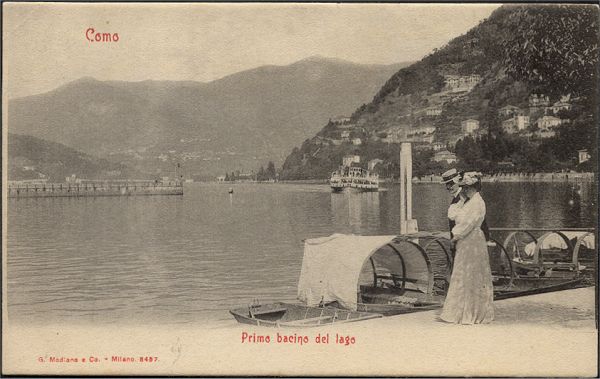
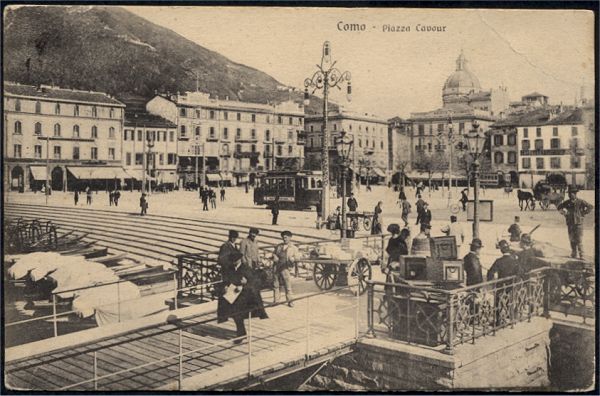
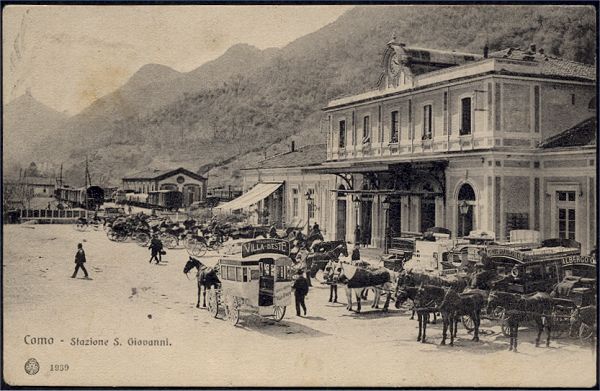
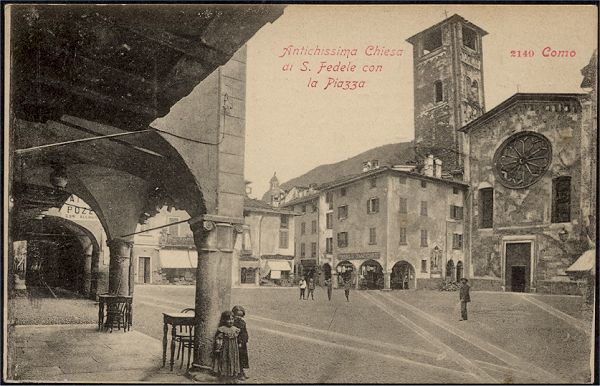
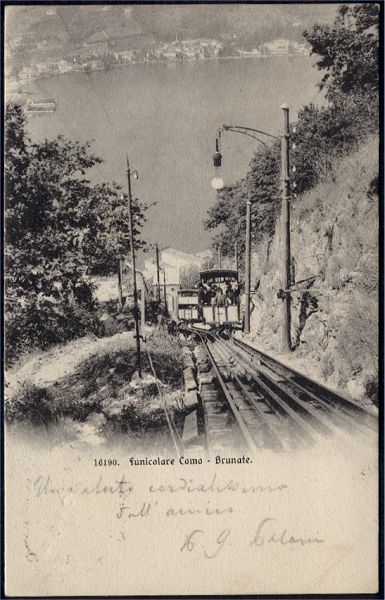
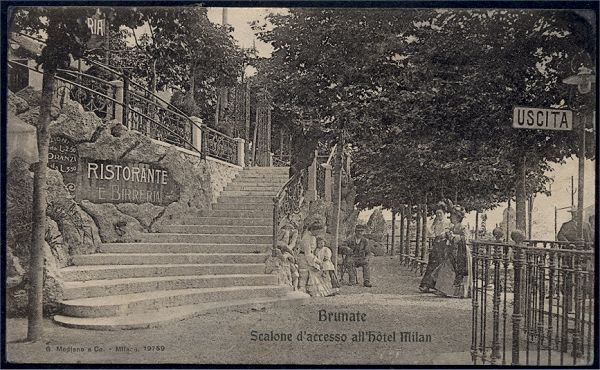
I represent here just for curiosity some postcard of end '800 as was in reality the Como town (Fig. 1 to 19). Because the postcards appeared only in the last 1800 years, the images are not exactly as it was the town at the Lombardy-Venetia time, but I believe that they can anyway give an indication enough realistic of the huge difference in structure and about the way of life of that time.
The beautiful postcards come from the huge collection of my brother, whom my thanks go to (by the way if somebody has old Como postcards or of the first lake basin, please contact me!!!).
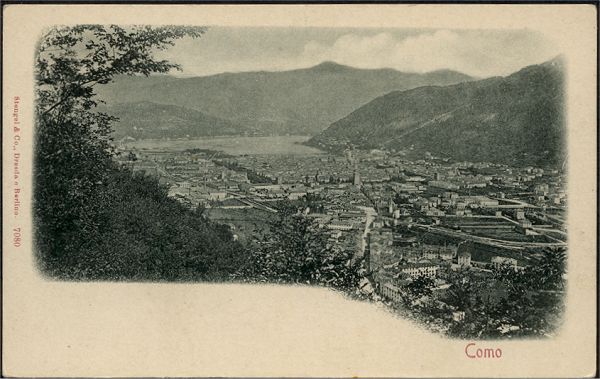
NOTE: for the postcards in vertical format it is not suggested to open the secondary window at full screen.
Fig. 1
Panorama
(54Kb) Fig. 2
Panorama
(55Kb) Fig. 3
Harbor
(64Kb) Fig. 4
Lake promenade
(54Kb)
Fig. 5
Cathedral
(53Kb) Fig. 6
Cathedral
(53Kb) Fig. 7
Lake promenade
(62Kb) Fig. 8
Steamship
(56Kb)
Fig. 9
Flooding
(51Kb) Fig. 10
Volta square
(63Kb) Fig. 11
The tower
(74Kb) Fig. 12
Life scenes
(61Kb)
Fig. 13
Life scenes
(47Kb) Fig. 14
The square
(63Kb) Fig. 15
The railroad
station
(60Kb) Fig. 16
S. Fedele square
(59Kb)
Fig. 17
The funicular
railway
(59Kb) Fig. 18
Life scenes
(77Kb) Fig. 19
G. Garibaldi
monument
(60Kb)
If somebody want further info on Como, besides writing to me, can browse several existent sites, easy to find with any search engine; out of them I mention some here that I found with a quick search.
http://www.comoin.com/home.htm http://www.lagodicomo.com/ http://www.comoonline.com/ http://comoinfo.freeweb.supereva.it/